Keeping Your Garage Cool Enough for Wine and Storage in the Okanagan Heat
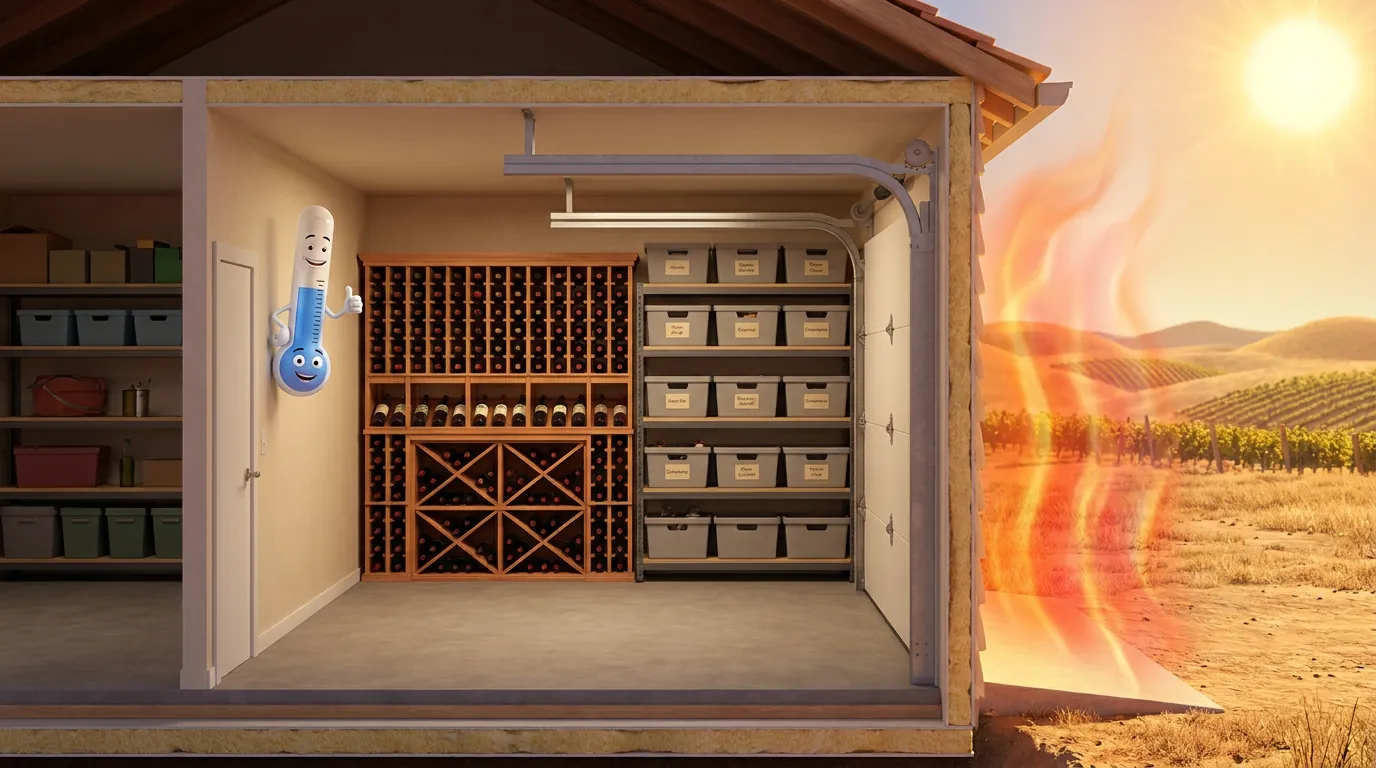
In the heart of Okanagan wine country, the garage often doubles as a cellar, a pantry, and a storage room. Cases of wine, a spare fridge, tools, sports gear, and who knows what else end up out there, and a lot of it does not love heat. The trouble is that an uninsulated Kelowna garage is one of the hottest spaces on the property in summer, easily climbing past the outdoor temperature, then swinging cold in winter. Those big swings are hard on wine and anything else heat-sensitive. The good news is that you can make a garage far cooler and more stable, and here is how.
The short answer: insulation and good weather seals do most of the work, and a lighter door colour, shading, and ventilation take the rest of the edge off. The garage door itself is the biggest single factor, since it is the largest sun-facing surface. Let us go through what actually helps.
Why an Okanagan garage overheats
A garage door is a large panel facing the sun, and an uninsulated one is essentially a heat collector. Through a long Kelowna afternoon it absorbs solar heat and radiates it into the garage, while the concrete floor and walls store heat too. Because a garage usually has little ventilation, that heat has nowhere to go, so it builds up and the space turns into an oven that can run much hotter than the air outside. Then winter swings it the other way, cold and sometimes damp.
For wine and stored goods, it is the swing that does the damage as much as the peak. Wine in particular dislikes both high temperatures and rapid temperature changes, and a garage that bakes by day and cools at night, then freezes in winter, is a tough environment for it. The same swings are hard on electronics, certain tools, and anything with seals or adhesives. Stabilizing the temperature is the real goal, not just shaving the peak.
Understanding that the door is the main entry point for the heat tells you where to focus. The single most effective change is reducing how much heat the door lets through, which is exactly what insulation does, and why an insulation upgrade pays off in summer just as much as in winter here.
Insulation and sealing for a stable temperature
It is easy to think of insulation as a winter feature, but it works identically against summer heat. An insulated door slows heat transfer in both directions, so in a heat wave it keeps the sun’s heat from radiating through into the garage. An insulated, steel-foam-steel door stays far cooler on the inside surface than a single skin of metal baking in the sun, which keeps the whole garage cooler and steadier, exactly what stored wine and gear want.
Weather seals are the partner to insulation. Gaps around the door, a worn bottom seal, or hardened side weatherstripping let hot outside air leak straight in, undermining whatever insulation you have. Good seals keep the cooler air in and the hot air out, and they do double duty by keeping winter cold and dust out later. Checking and refreshing the seals is a small maintenance job with an outsized effect on how stable the garage stays.
Together, an insulated door and sound seals are the foundation of a cooler, steadier garage. If your door is old and uninsulated and the space is genuinely hot, a garage door installation with an insulated door is often the highest-impact fix, paying off in both the summer cooling and the winter warmth.
Quick wins: shade, ventilation, and colour
Beyond the door itself, a handful of low-effort measures help, especially in combination. None of these replace insulation, but they add up.
- Choose a lighter or mid-tone door colour, which absorbs far less heat than a dark one in full sun.
- Improve ventilation so the hottest air near the ceiling can escape, with a vent or a fan.
- Shade the door from the outside where you can, with an awning, a tree, or landscaping.
- Keep the door closed during the hottest part of the day so it is not letting a wave of hot air in.
- Store wine and heat-sensitive items away from the sun-facing wall, ideally low and against an interior wall.
The biggest of these is usually colour and ventilation. A lighter door simply starts cooler, and moving the trapped hot air out near the ceiling keeps it from building into a furnace. For genuinely valuable bottles, a dedicated wine fridge inside the cooled garage gives you precise control, but a well-insulated, sealed, shaded garage is a big step up from a bare one for everyday storage.
When a new insulated door is the real fix
Sometimes the measures above only go so far. If your garage door is old, single-skin, and dark, and the garage swings hot in summer and cold in winter, the honest answer is that the door is the problem, and an insulated replacement is the real fix. It addresses the largest heat source directly and, unlike a fan or an awning, it works every hour of every hot day with no effort on your part, holding the temperature steadier year-round.
Picture a Kelowna homeowner who keeps a few cases of local wine and a beer fridge in an attached garage with an old dark uninsulated door. Every summer the garage is an oven and the bottles ride a temperature roller-coaster, and the bedroom above bakes too. Swapping to a mid-tone insulated door, with fresh weather seals, drops the garage temperature noticeably, steadies the swing, and takes the heat load off the room above, and the same door keeps everything warmer come winter. One upgrade, both seasons, and a far better home for what is stored there.
If your garage is too hot for what you keep in it, we can help you decide whether sealing and insulating your current door is enough or a new insulated door is the better investment. for garage door insulation in Kelowna, call (778) 910-3106, or , and we will help you get the heat under control before the next heat wave.
Frequently Asked Questions
Is a garage a good place to store wine in the Okanagan?
Only if the temperature is kept stable and cool. An uninsulated Kelowna garage can swing from very hot in summer to cold in winter, and big swings are hard on wine. With good insulation, sealing, and shading, a garage can be made stable enough for casual storage, though a true cellar or wine fridge is better for valuable bottles. The key is reducing the temperature swing.
What R-value do I need to keep a garage cool in summer?
For an attached garage in our climate, a mid-range insulated door, roughly R-12 to R-16, makes a real difference, slowing the sun's heat from radiating in. Insulation works in both directions, so the same door that keeps winter cold out keeps summer heat out. Pair it with good seals and shading for the best result.
Does the colour of my garage door affect how hot the garage gets?
It does. A dark door in full Kelowna sun absorbs much more heat than a light or mid-tone one, raising the surface temperature and the heat it radiates inside. If you are choosing or repainting a door and keeping the garage cool matters, a lighter or mid-tone colour runs cooler while still looking sharp.
How can I keep my attached garage cooler in summer?
The biggest levers are insulating the garage door and walls, sealing gaps so hot air does not leak in, choosing a lighter door colour, and adding ventilation or shade. Together these reduce how much heat builds up and how hot the space gets, which protects both the garage's contents and the rooms next to it.
Will cooling my garage help the rest of the house?
Often, yes. An attached garage that bakes pushes heat through the shared walls and the door into the house, making the adjacent rooms hotter and your air conditioning work harder. Keeping the garage cooler with insulation and sealing reduces that heat transfer, which can make the whole house more comfortable and ease the cooling load.
Is it worth upgrading my garage door to keep stored items cool?
If your door is old, uninsulated, and the garage gets genuinely hot, an insulated replacement is often well worth it, since it pays off in both summer cooling and winter warmth and protects whatever you store there. If the door is sound, adding seals and shading may get you most of the benefit for less.